From Passive CCTV to Agentic AI: The Evolution of Vision
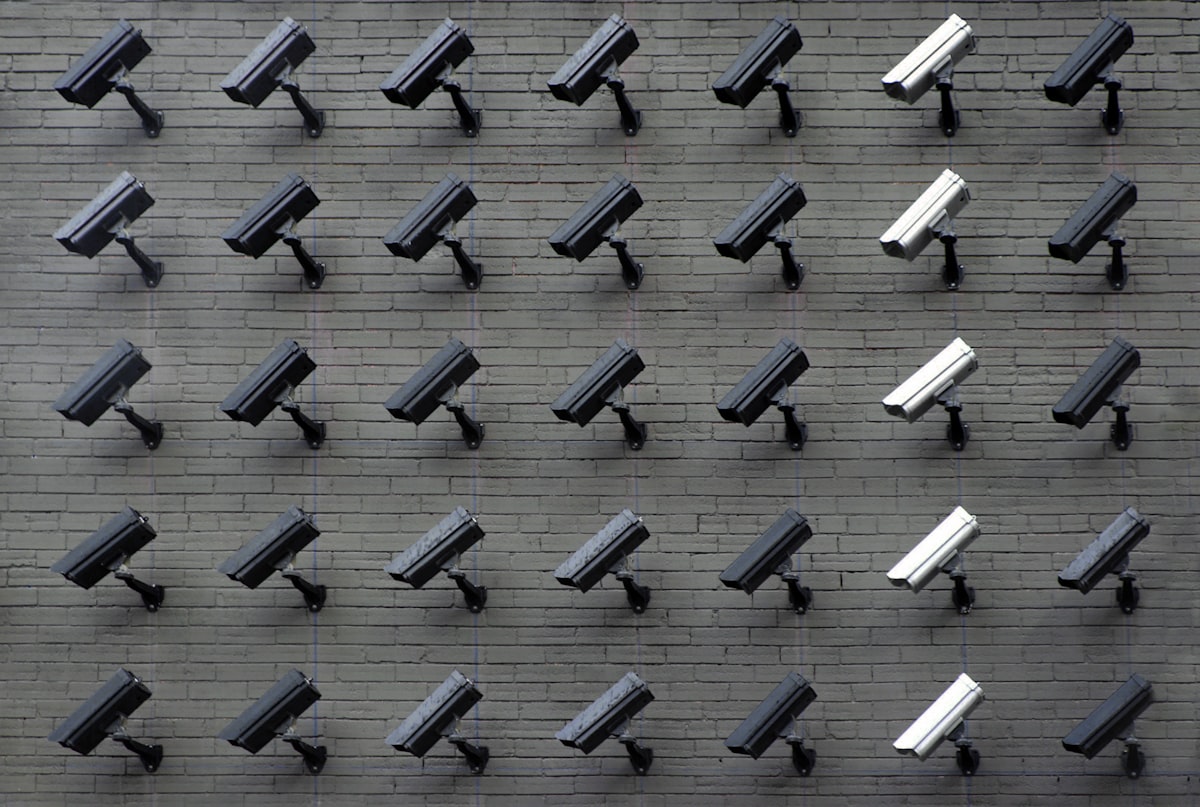
The global video surveillance market is projected to exceed $80 billion by 2027, yet the vast majority of installed cameras still function as little more than digital tape recorders. They capture everything and understand nothing. The journey from passive CCTV to truly intelligent vision systems has taken decades, passing through distinct technological eras — each one fundamentally changing what cameras can do and what organizations can learn from visual data.
Understanding these eras is more than an academic exercise. It reveals where the industry is headed and why the current moment — the emergence of agentic AI vision — represents the most significant shift since cameras first went digital.
Era 1: Recording (1990s–2000s)
The first era of modern surveillance was defined by a single capability: capture. Analog CCTV systems recorded video to tape, later to hard drives. Their value was entirely retrospective. When an incident occurred, operators would rewind footage, scrub through hours of recordings, and hope the relevant moment was captured at a useful angle.
The limitations were severe. Tapes degraded. Storage was expensive. And the fundamental workflow required a human to watch and interpret every frame. Studies from this era consistently showed that a single operator monitoring more than four to six screens simultaneously would miss the majority of relevant events within 20 minutes of starting their shift. The technology captured data but placed the entire burden of understanding on people.
Despite these constraints, the recording era established something important: the expectation that visual monitoring was essential infrastructure. Factories, retail stores, banks, and public spaces all invested in cameras, building the physical networks that later eras would build upon.
Era 2: Detection (2010s)
The second era arrived with digital video analytics. Cameras — or more precisely, the software connected to them — gained the ability to detect predefined events. Motion detection was the first breakthrough: the system could alert a human when something moved in a restricted zone. Tripwire analytics followed, tracking objects crossing virtual boundaries.
Research from the Security Industry Association estimated that by 2018, fewer than 10% of recorded surveillance footage was ever reviewed by a human. The remaining 90% existed as dark data — captured but never analyzed.
Detection-era systems were rule-based. Engineers would define triggers: if a pixel region changes by more than a threshold, fire an alert. If an object crosses a line, log the event. This approach worked for narrow, well-defined scenarios but collapsed under complexity. False positive rates for basic motion detection in outdoor environments regularly exceeded 95%, creating alert fatigue that was in many ways worse than having no alerts at all.
Still, the detection era proved a critical concept: automated visual analysis could reduce the burden on human operators. The technology was primitive, but the direction was clear.
Era 3: Understanding (2020s)
Deep learning changed everything. Convolutional neural networks, trained on millions of labeled images, gave vision systems the ability to classify objects, recognize patterns, and interpret scenes with accuracy that approached — and in some domains exceeded — human perception.
This was the era of computer vision as a recognition engine. Systems could identify specific products on a shelf, distinguish between a person and a shadow, track individual objects across multiple camera views, and estimate crowd density. The technology moved from detecting that something happened to understanding what happened.
Manufacturing quality inspection was an early beneficiary. Where rule-based systems could only flag gross deviations, deep learning models could learn the subtle visual signatures of defects: hairline cracks, color inconsistencies, dimensional variations invisible to the human eye at production speed. Retail analytics also matured, moving beyond counting footfall to understanding customer behavior, dwell patterns, and engagement with displays.
The limitation of this era was architectural. Most understanding-era systems operated as perception engines feeding dashboards. They could tell you what was happening, but the response still depended on a human reviewing the output and deciding what to do. The loop from observation to action remained open.
Era 4: Agentic AI (Now)
The current era closes that loop. Agentic AI vision systems do not merely perceive and classify — they reason, decide, and act. They operate as autonomous agents within defined boundaries, taking real-time action based on what they see without waiting for human approval on every decision.
The distinction is significant. An understanding-era system in a recycling facility might identify a contaminant on a conveyor belt and flag it in a dashboard. An agentic system identifies the contaminant, determines the optimal sorting action, commands an actuator to remove it, verifies the action was successful, and logs the entire sequence — all within the 80 to 100 milliseconds before the object passes the intervention point.
This is the approach Neuvana has taken with its platform. Elysium, designed for industrial waste sorting, operates as a fully agentic system: perceiving materials on high-speed conveyors, classifying them across hundreds of waste categories, making sorting decisions, and controlling physical actuators in real time. The system does not generate reports for humans to act on later. It acts, continuously, at speeds no human operator could match.
Similarly, VisionPulse in retail environments moves beyond passive analytics. Rather than simply counting visitors and presenting charts, it builds real-time behavioral models that can inform dynamic store operations — adjusting staffing recommendations, identifying service opportunities, and triggering alerts when engagement patterns deviate from baseline.
What Makes Agentic Vision Different
Three architectural requirements separate agentic systems from their predecessors:
- Edge-first processing. Agentic decisions must happen in milliseconds. Round-trips to cloud servers introduce latency that makes real-time physical actuation impossible. The inference must happen at the edge, close to the camera and the machinery it controls.
- Closed-loop feedback. The system must verify the results of its actions and adjust. If a sorting actuator misfires, the system needs to detect the failure and compensate. This requires continuous perception, not periodic snapshots.
- Bounded autonomy. Agentic does not mean unconstrained. Well-designed systems operate within clearly defined parameters — approved action types, confidence thresholds, escalation rules — that keep autonomous operation safe and auditable.
These requirements explain why the transition from understanding to agentic AI is not simply a software upgrade. It demands rethinking the entire pipeline: where computation happens, how models are deployed and updated, how physical systems integrate with digital intelligence, and how humans maintain oversight without becoming bottlenecks.
The Road Ahead
The CCTV market’s transformation mirrors a broader pattern in enterprise AI. The value is shifting from data collection to autonomous action. Organizations that invested heavily in camera infrastructure over the past two decades are now sitting on networks that, with the right software layer, can become distributed AI agents — each camera a sensor feeding an intelligent system that perceives, reasons, and acts.
The passive camera is not disappearing. Recording still matters for compliance, forensics, and training data. But the center of gravity is moving decisively toward systems that do not wait to be watched — systems that watch, understand, and respond on their own. That shift, from passive observation to agentic intelligence, is the defining transition of this decade in computer vision.
For industries operating at physical speed — manufacturing lines, sorting facilities, busy retail environments — the question is no longer whether to adopt intelligent vision. It is whether the systems they adopt can act fast enough, reliably enough, and autonomously enough to deliver value at the pace their operations demand.